
 Save
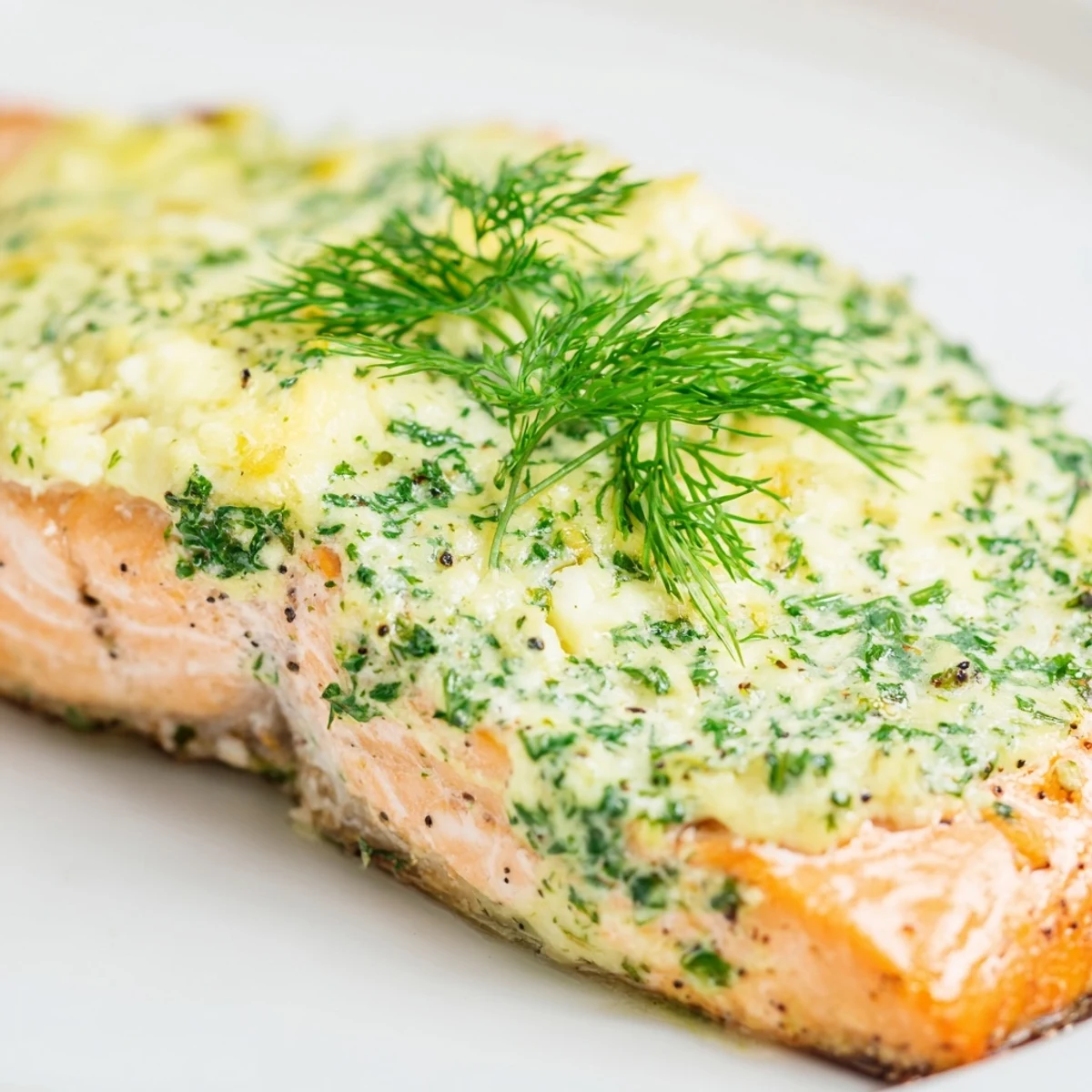
Save This dish features salmon fillets oven-baked to achieve a tender and flaky texture. A homemade dill butter, combining softened butter, fresh dill, garlic, lemon zest, and juice, enhances the flavor with bright and herbal notes. Baking the salmon at 400°F for about 18 minutes ensures a juicy, perfectly cooked finish. Optional garnishes like lemon wedges and dill sprigs add freshness and visual appeal. It's an easy, elegant meal ideal for pescatarian and low-carb preferences.
There's something magical about the moment when you pull a perfectly baked salmon from the oven and that herbaceous dill butter starts pooling around the edges. I discovered this recipe on a Tuesday when I had twenty minutes and zero inspiration, but somehow ended up making something so elegant that my dinner guests thought I'd spent all afternoon cooking. The simplicity is deceptive—it tastes like restaurant food, but it's genuinely faster than ordering takeout.
I made this for my friend who'd just moved into her new apartment, and she stood in her kitchen watching the oven like it held the secret to happiness. When those fillets came out golden and fragrant, she got genuinely quiet—the kind of quiet that means food just landed right. We ate it at her kitchen counter with the windows open, and suddenly her bare apartment felt like home.
Ingredients
- Salmon fillets (6 oz each): These are your canvas, and the quality matters more than you'd think—look for fish that smells like the ocean, not fishy, and don't skip the skinless option if you find it unsettling.
- Unsalted butter: Softened butter blends seamlessly into the dill mixture, and unsalted lets you control the seasoning perfectly.
- Fresh dill: The star of the show—dried dill is a pale shadow of fresh, so this is one place where fresh absolutely matters.
- Garlic clove: Just one, minced fine so it mingles with the butter instead of announcing itself in chunks.
- Lemon zest and juice: The zest adds brightness that juice alone can't deliver, cutting through the richness of the butter.
- Salt and black pepper: Modest amounts that let everything else shine.
- Lemon wedges and fresh dill sprigs (optional garnish): These aren't just pretty—they remind people what they're eating and offer a fresh squeeze if needed.
Instructions
- Heat your oven and prep your pan:
- Get your oven to 400°F and line a baking sheet with parchment paper—this prevents sticking and makes cleanup almost laughable. If you don't have parchment, a light spray of cooking oil works just fine.
- Make the dill butter:
- In a small bowl, combine your softened butter with the dill, garlic, lemon zest, juice, salt, and pepper. Stir it together until you've got an even, fragrant spread that looks like it knows what it's doing.
- Arrange the salmon:
- Place fillets skin-side down on your prepared sheet, leaving a little breathing room between them so heat can circulate and cook them evenly.
- Spread the butter:
- Divide the dill butter evenly across each fillet, spreading it gently so it coats the top—this is your insurance policy for flavor and moisture.
- Bake until just cooked:
- Slide the sheet into the oven for 15 to 18 minutes, depending on how thick your fillets are. You'll know it's done when the salmon flakes easily with a fork and reaches 145°F internally—don't overcook or you'll lose the tender, buttery texture.
- Rest and serve:
- Let everything sit for 2 minutes after coming out of the oven—this seals in the juices and gives you a moment to plate. Top with lemon wedges and fresh dill if you're feeling fancy, then serve immediately while everything's still warm.
 Save
Save My mom used to say that salmon with dill butter was 'too fancy' for regular Tuesday nights, but the day I made it for her without warning, she realized we'd been overthinking what counts as special. There's something about feeding someone something this good without ceremony that changes how they think about cooking.
Why This Works So Well
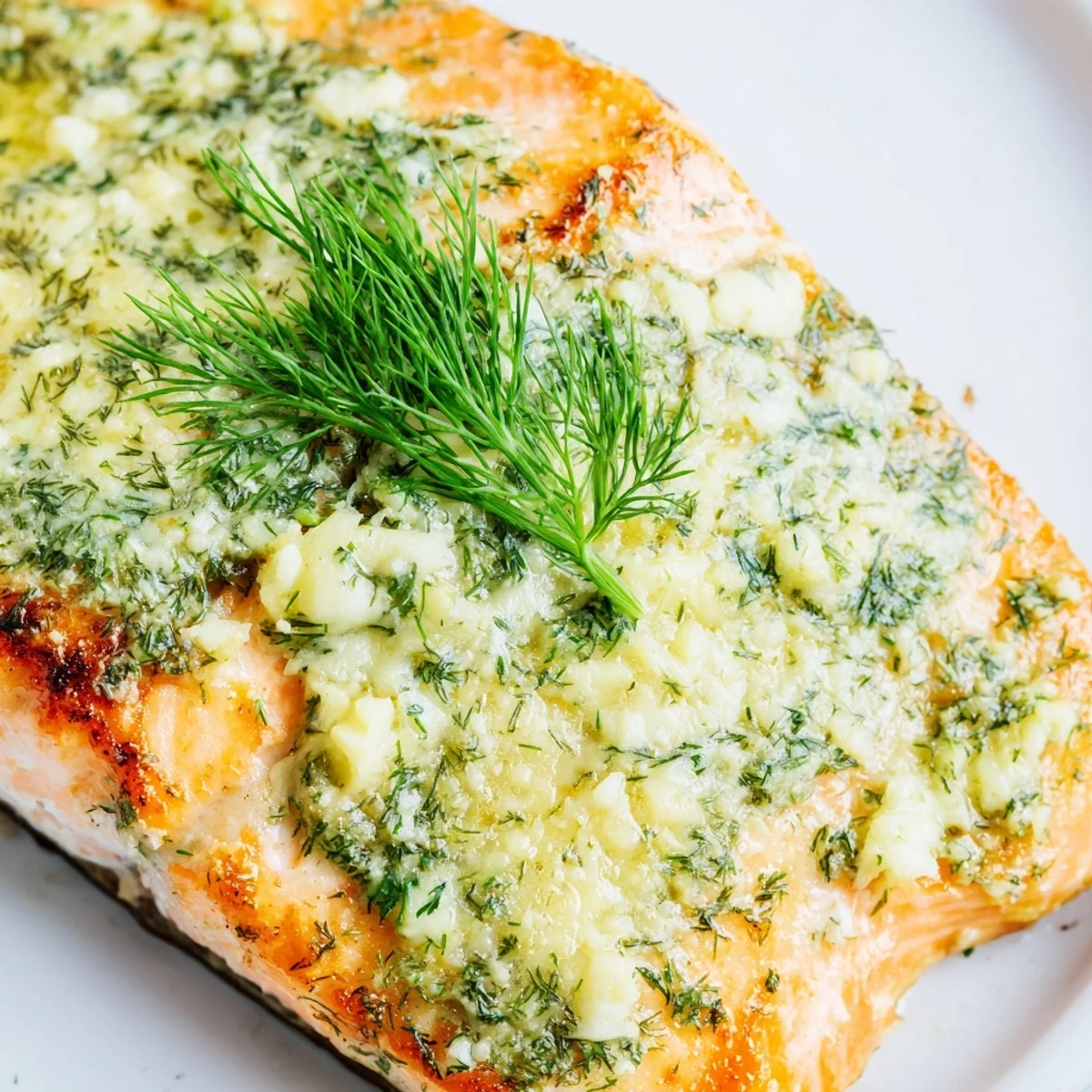
The magic here is that oven-baking keeps the salmon moist while the dill butter adds richness and flavor all at once. You're not juggling multiple techniques or timing different components—everything cooks together in one pan, which is why this works on nights when your brain is already tired. The butter creates its own sauce as it melts, so you don't need to make anything else.
What to Serve Alongside
I've made this dozens of ways, and the best accompaniments are the ones that don't compete with the dill butter. Steamed asparagus is my default because it's ready in the same time as the salmon, and roasted potatoes add substance without heaviness. A simple mixed green salad with lemon vinaigrette works too—the acid echoes the lemon in the butter without being redundant.
Tricks and Tweaks
Once you nail the basic version, there are gentle variations worth exploring. Some people swap half the butter for olive oil to lighten it, which works beautifully if you're watching richness. A pinch of crushed red pepper wakes things up if you like heat, and a tiny drizzle of honey in the butter creates an unexpected sweet-savory note that keeps people guessing.
- If your salmon fillets are thicker than usual, add 2 to 3 minutes to the baking time rather than using higher heat.
- Make the dill butter ahead of time and store it in the fridge—it lasts about three days and transforms any protein instantly.
- If you're cooking for someone with dairy restrictions, the olive oil swap works beautifully and no one loses anything in translation.
 Save
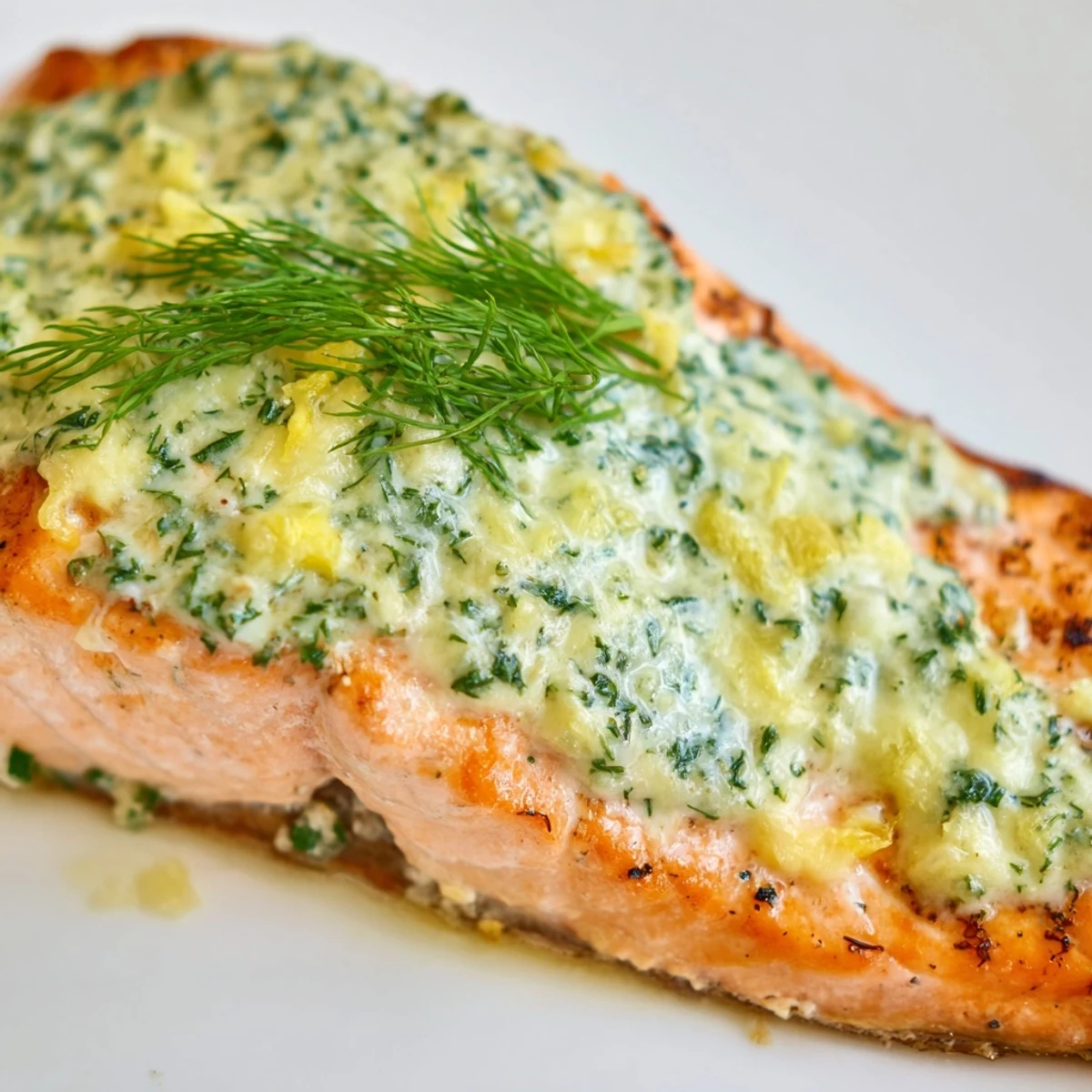
Save This recipe became my fallback for 'I need something impressive but have no energy,' and it's never let me down. Make it once, and you'll understand why it stays in rotation forever.
Recipe FAQs
- → How to tell when the salmon is perfectly cooked?
-
The salmon is ready when it flakes easily with a fork and reaches an internal temperature of 145°F (63°C).
- → Can I use skin-on salmon fillets?
-
Yes, skin-on fillets can be baked directly; placing them skin-side down helps retain moisture during cooking.
- → What are good side dishes to serve with this salmon?
-
Steamed asparagus, roasted potatoes, or mixed green salads complement the flavors well.
- → Is it possible to lighten the butter topping?
-
Mixing half the butter with olive oil creates a lighter but still flavorful herb topping.
- → How can I enhance the dill butter for extra flavor?
-
Adding a pinch of crushed red pepper or a drizzle of honey to the dill butter boosts its complexity.