
 Save
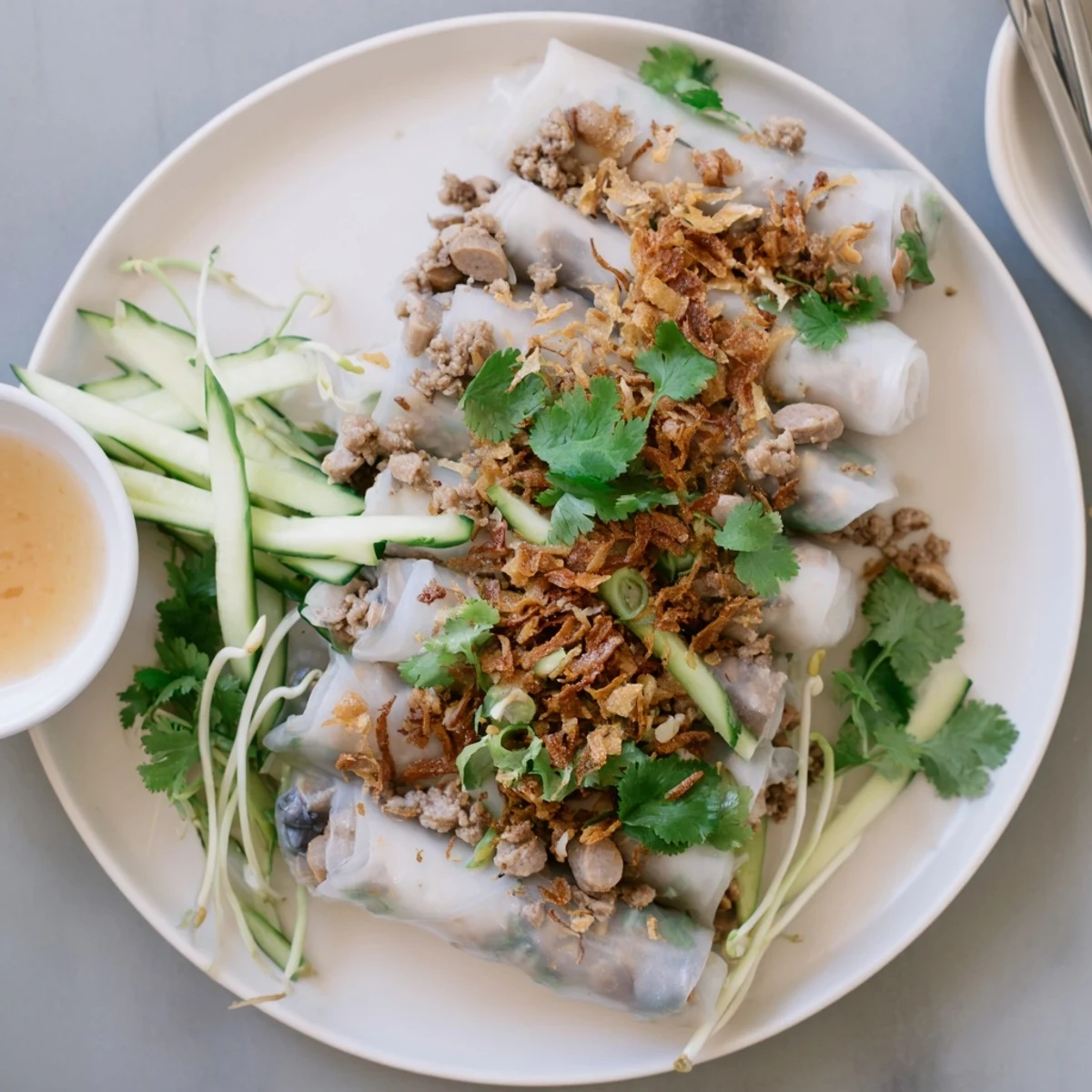
Save Banh Cuon features translucent rice sheets steamed to silky perfection, then rolled around a savory mixture of ground pork, wood ear mushrooms, and aromatics. The process involves creating a thin batter, cooking a flavorful filling, and skillfully steaming each delicate sheet before assembling.
Fresh garnishes like fried shallots, cilantro, bean sprouts, and cucumber add texture and brightness, while the homemade nuoc cham dipping sauce balances everything with sweet, sour, and salty notes. The result is an elegant Vietnamese classic perfect for any time of day.
My grandmother's tiny kitchen in Saigon always smelled like steam and shallots in the morning. She would stand over her battered aluminum steamer, wrists moving in practiced circles as she spread rice batter into translucent circles. Watching those delicate sheets emerge, glistening and impossibly thin, felt like witnessing magic. Years later in my own cramped apartment, I finally understand why she made this look effortless after decades of practice.
Last Sunday, I attempted Banh Cuon for friends who had never tried Vietnamese breakfast food. My steamer setup looked precarious balanced on a wok, and the first three sheets tore completely. By the seventh roll, my wrist found the rhythm, and suddenly we were all gathered around the platter, folding slippery rice sheets around filling and arguing over who got the last roll. That moment of messy, delicious chaos made all the practice worth it.
Ingredients
- Rice flour: The foundation of these delicate rolls, use a good quality flour labeled specifically for Banh Cuon if you can find it
- Tapioca starch: This gives the rolls their signature stretch and translucent appearance, creating that almost jelly-like texture
- Cornstarch: Adds structure and helps the rolls hold their shape without becoming tough or rubbery
- Ground pork: Provides savory richness, though you can substitute with shrimp or make it entirely vegetarian
- Wood ear mushrooms: Soak these until they soften completely, then chop them small for incredible texture contrast in every bite
- Fried shallots: Absolutely essential for that authentic Vietnamese flavor and a satisfying crunch on top
Instructions
- Prepare the silky batter:
- Whisk the rice flour, tapioca starch, cornstarch, salt, water, and vegetable oil until completely smooth. Let it rest for at least 20 minutes so the starches can fully hydrate and any lumps dissolve naturally.
- Cook the savory filling:
- Heat oil in a skillet over medium heat and sauté the onions and garlic until fragrant. Add the ground pork and cook until browned, then stir in the chopped wood ear mushrooms, fish sauce, and pepper for 2 to 3 minutes until everything is fragrant and fully cooked.
- Mix the dipping sauce:
- Combine the fish sauce, lime juice, sugar, and warm water in a small bowl, stirring until the sugar completely dissolves. Add the minced garlic and sliced chili, then taste and adjust until you hit that perfect balance of sweet, sour, and salty.
- Steam the rice sheets:
- Bring water to a boil in a wide steamer or large sauté pan topped with a lightly oiled cloth or silicone tray. Ladle about 1/4 cup of batter onto the surface, swirling quickly to coat evenly, then cover and steam for 1 to 2 minutes until set and slightly translucent.
- Roll and fill:
- Gently lift the cooked sheet onto a lightly oiled plate using a thin spatula, then place a spoonful of filling along one edge and roll up tightly. Repeat with the remaining batter and filling, working quickly while the sheets stay pliable.
- Garnish and serve:
- Arrange the finished rolls on a platter and generously top with fried shallots, fresh cilantro, bean sprouts, cucumber slices, and Vietnamese pork sausage if using. Serve immediately with bowls of the dipping sauce on the side.
 Save
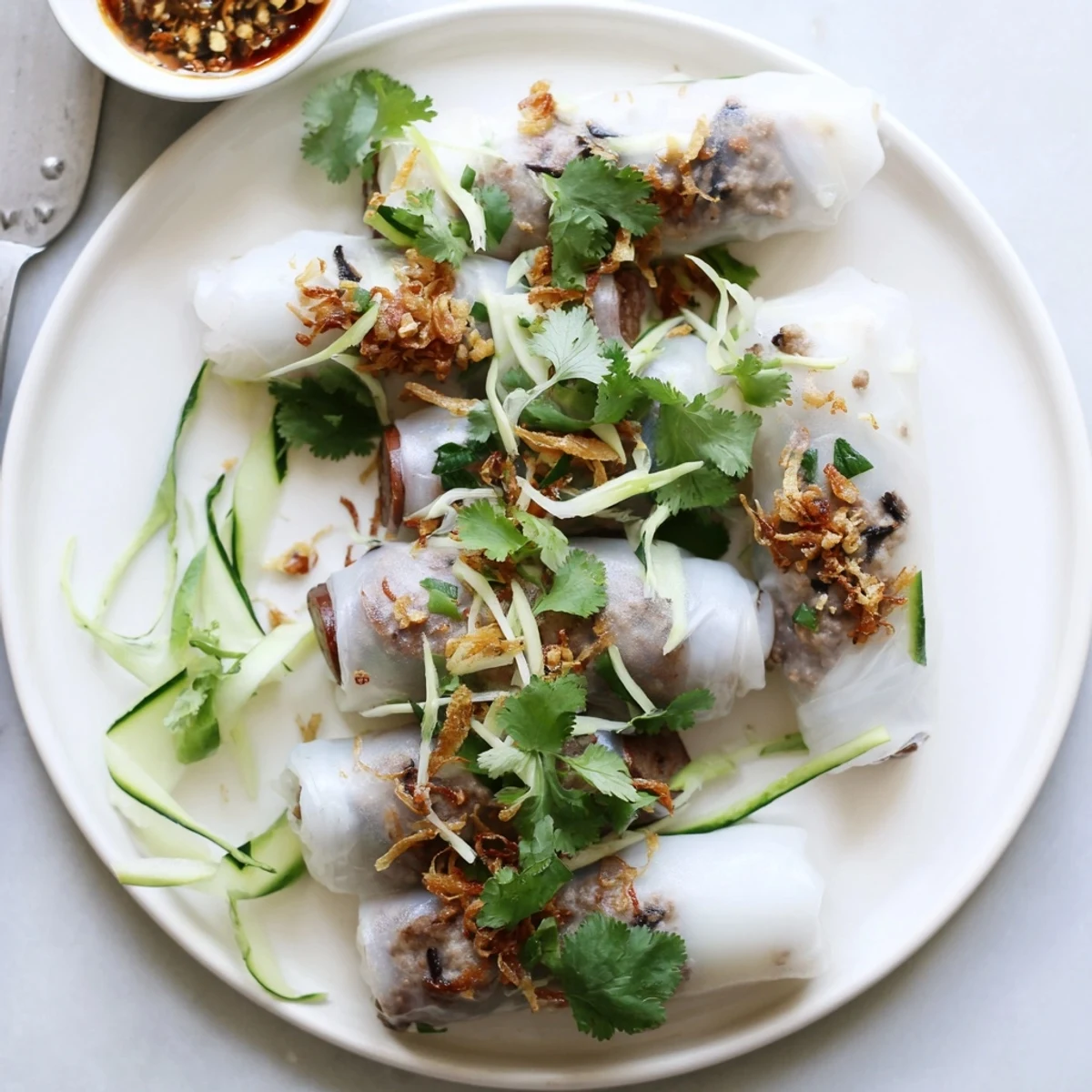
Save Something magical happens when you gather around a platter of fresh Banh Cuon with people you love. The steam still rising, everyone reaching in with chopsticks, the silence that falls as people take that first bite. It transforms breakfast into an experience, a moment suspended in time.
Getting The Right Texture
The difference between a good Banh Cuon and a great one comes down to the steaming technique. Your steamer needs to be at a steady, gentle boil before you start. If the water boils too violently, the bubbles will create holes in your delicate sheets. Too gentle, and the batter will spread unevenly before setting.
Mastering The Spreading Motion
Learning to spread the batter in a perfect thin circle takes practice. Hold your ladle close to the surface and pour in a continuous motion, moving your wrist in quick, confident circles. Do not go back and fill in thin spots, just keep moving and let the batter find its own level.
Make Ahead Strategy
While Banh Cuon tastes best fresh from the steamer, you can prepare components ahead to make assembly easier. The filling can be cooked a day in advance and refrigerated, then gently reheated before serving. The dipping sauce actually benefits from sitting for at least an hour so the flavors meld together.
- Mix your batter the night before and store it in the refrigerator for even better texture
- Keep your garnishes prepped and separated so they stay crisp and fresh
- If you must reheat leftover rolls, steam them for just 30 seconds to restore their silky texture
 Save
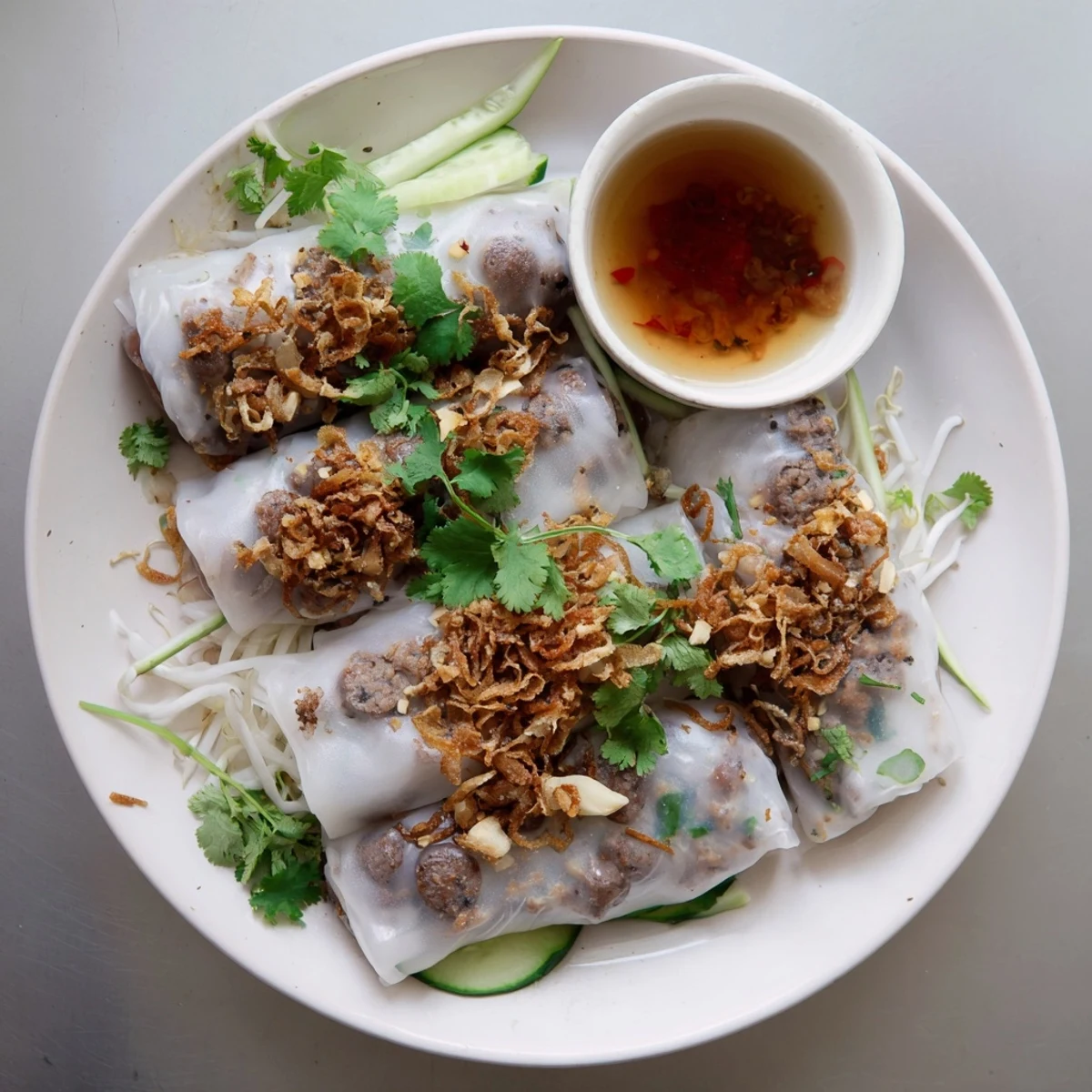
Save There is something deeply satisfying about mastering a dish that seemed impossibly difficult the first time you tried. Every torn sheet and imperfect roll teaches you something, and suddenly you are the one making it look effortless.
Recipe FAQs
- → What is Banh Cuon?
-
Banh Cuon is a traditional Vietnamese dish consisting of delicate steamed rice rolls filled with savory ingredients like ground pork and wood ear mushrooms, typically served for breakfast or as a light snack.
- → How do I achieve the perfect batter consistency?
-
The batter should be thin and smooth, similar to crepe batter. It must rest for at least 20 minutes to ensure proper texture. If it's too thick, the rolls will be heavy; too thin and they'll tear easily.
- → Can I make Banh Cuon without a steamer?
-
Yes, you can use a nonstick pan with a lid. Heat the pan, lightly oil it, pour a thin layer of batter, cover, and cook until set. The steaming method produces more authentic results, but the pan method works well.
- → How long can I store Banh Cuon?
-
Banh Cuon is best served immediately while the rice rolls are soft and silky. They can be refrigerated for up to 2 days, but the texture becomes slightly chewier. Reheat gently by steaming for 1-2 minutes.
- → What can I use as a vegetarian alternative?
-
Substitute crumbled tofu, seasoned with soy sauce and mushrooms, for the ground pork filling. Use vegetarian fish sauce in both the filling and dipping sauce to maintain the authentic flavor profile.
- → Why do my rice sheets keep tearing?
-
Tearing usually occurs when the batter is too thin, the steaming surface isn't properly oiled, or the sheets are removed too soon. Ensure your batter has the right consistency, use a well-oiled cloth or tray, and let the sheet set completely before removing.