
 Save
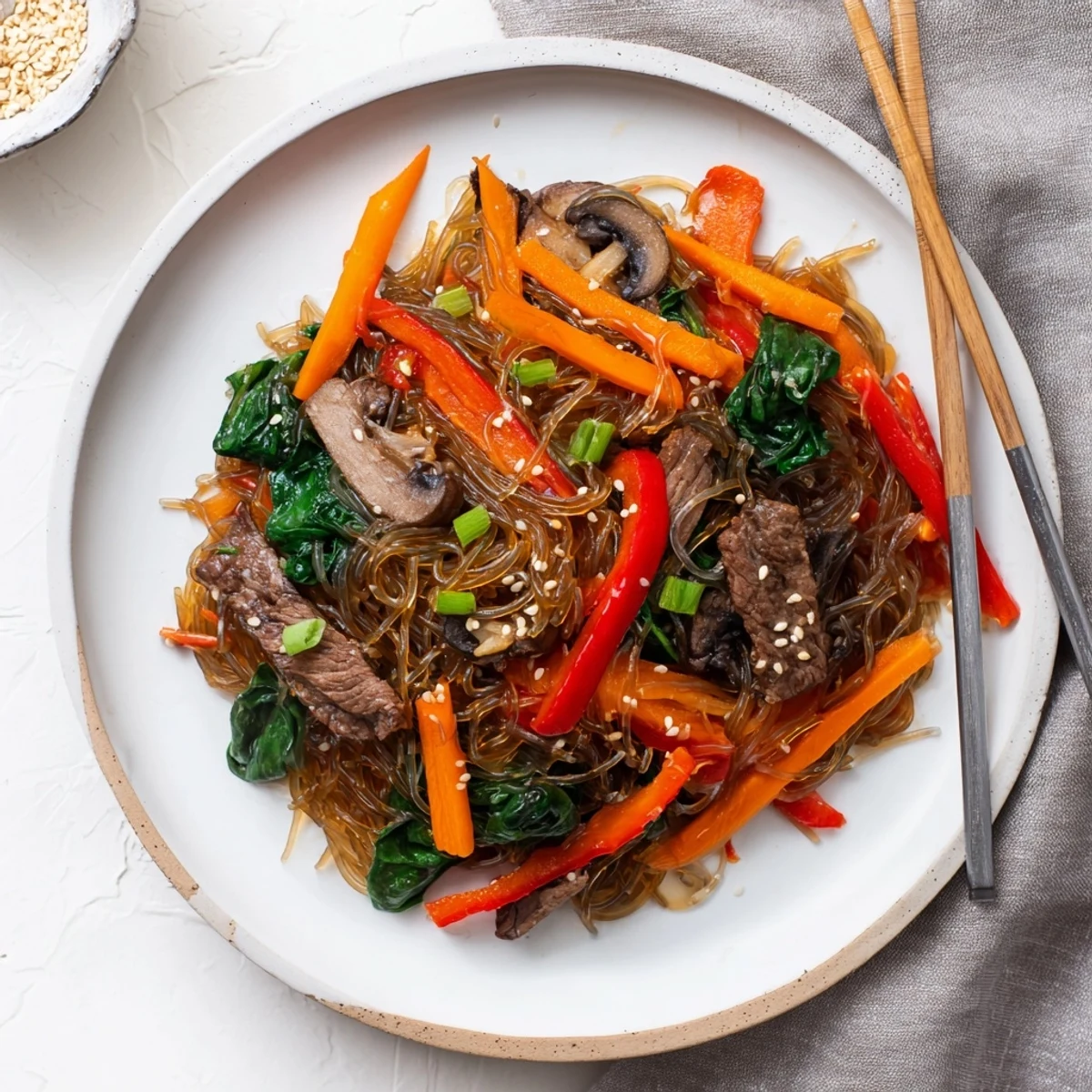
Save Satisfy your craving for Korean comfort cuisine with these savory beef noodles featuring tender marinated steak, chewy sweet potato glass noodles, and crisp vegetables all coated in a rich gochujang-based sauce. Ready in just 45 minutes, this dish delivers restaurant-quality flavors with the perfect balance of sweet, salty, and mildly spicy notes that make it an instant family favorite.
The steam rising from my bowl that first Seoul winter still lingers in my memory. Small kitchen, big flavors, and a tiny burner struggling against the cold air seeping through poorly insulated windows. My Korean neighbor showed me how glass noodles transform from translucent to golden, absorbing every drop of that sweet-spicy sauce like flavor sponges.
Last Tuesday, my usually picky eater actually asked for seconds. The way those springy noodles twirl around the beef and vegetables makes eating feel almost playful. My partner now requests this dish whenever the weather turns grey and melancholic.
Ingredients
- Flank steak, 400g (14 oz), thinly sliced: Flank offers the perfect balance of tenderness and beefiness that holds up against bold Korean flavors
- Soy sauce, 1 tbsp: This initial marinade penetrates the meat fibers, creating layers of umami that develop during stir-frying
- Cornstarch, 1 tbsp: The secret ingredient that keeps beef velvety and tender, preventing it from becoming tough in high heat
- Sesame oil, 1 tsp: Just enough to coat the beef with nutty fragrance without overwhelming other aromatics
- Korean sweet potato glass noodles, 300g (10 oz): These translucent noodles become delightfully chewy and absorb sauce beautifully
- Vegetable oil, 2 tbsp: Neutral oil lets the other ingredients shine while providing the medium for high-heat cooking
- Carrot, 1 medium, julienned: Adds subtle sweetness and crunch that contrasts the softer noodles and beef
- Red bell pepper, 1, thinly sliced: Brings vibrant color and fresh sweetness to balance the rich sauce
- Shiitake mushrooms, 1 cup, sliced: Earthy depth that bridges the beef and vegetables with their meaty texture
- Scallions, 3, sliced: Both aromatic and decorative, they provide gentle onion flavor throughout the dish
- Baby spinach, 2 cups: Wilts quickly into the noodles, adding nutrition and color without competing with flavors
- Soy sauce, 4 tbsp: The salty backbone of our sauce, providing essential umami and depth
- Brown sugar, 2 tbsp: Melts into the sauce creating that characteristic Korean sweet-savory balance
- Gochujang, 1 tbsp: Korean chili paste brings gentle heat and fermented complexity unlike any other hot sauce
- Mirin or rice wine, 2 tbsp: Sweet rice wine adds subtle sweetness and helps balance the salty soy sauce
- Sesame oil, 2 tsp: Finishing touch that provides aromatic nuttiness and glossy appearance
- Garlic, 2 cloves, minced: Fresh garlic is nonnegotiable for authentic Korean flavor foundation
- Fresh ginger, 1 tsp, grated: Zesty warmth that cuts through rich beef and ties the sauce together
- Water, 1 tbsp: Just enough liquid to help dissolve sugar and create pourable consistency
- Toasted sesame seeds, 1 tbsp: Final garnish that adds satisfying crunch and nutty fragrance
Instructions
- Marinate the beef:
- Toss sliced beef with soy sauce, cornstarch, and sesame oil until evenly coated. Let it rest while you prep everything else, allowing the cornstarch to tenderize the meat fibers.
- Cook the noodles:
- Boil noodles according to package directions, then drain and rinse under cold water to stop cooking. This prevents them from becoming sticky and gummy later.
- Whisk the sauce:
- Combine all sauce ingredients in a small bowl, stirring until brown sugar completely dissolves. Taste and adjust heat level by adding more gochujang if desired.
- Sear the beef:
- Heat oil in a large skillet over medium-high heat until shimmering. Add beef in a single layer and let it develop a crust before tossing, about 2 minutes total.
- Cook the vegetables:
- Add remaining oil to the pan, then stir-fry carrots, peppers, and mushrooms until they start to soften but still retain crunch. The vegetables should be vibrant and tender-crisp.
- Combine everything:
- Return beef to the pan with noodles, spinach, and sauce. Toss vigorously for 2 minutes until spinach wilts and everything is coated in glossy sauce.
- Garnish and serve:
- Top with toasted sesame seeds and fresh scallions. Serve immediately while noodles are still springy and sauce is clinging to every strand.
 Save
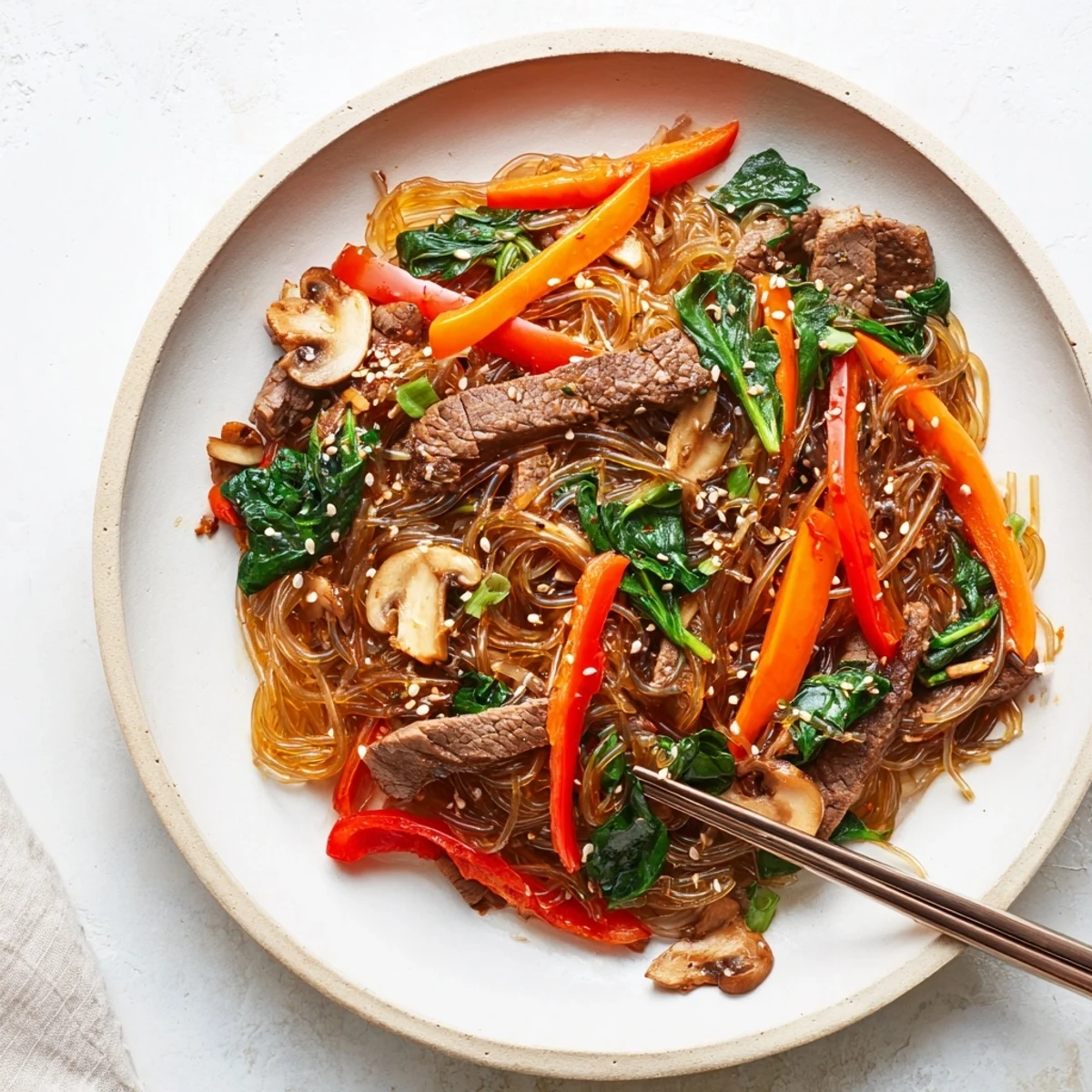
Save My roommate walked in while I was tossing the final ingredients together, drawn by the impossible-to-ignore aroma of garlic and sesame. Now she asks for the recipe every time she visits, saying it tastes like the dish we ordered on our first trip to Koreatown together.
Getting the Noodle Texture Right
I have learned that glass noodles can be tricky until you understand their personality. They need more boiling time than you expect, but that cold water rinse is nonnegotiable. The contrast between their springy chew and tender beef is what makes this dish sing.
Building the Perfect Sauce Balance
Traditional Korean cooking constantly balances sweet, salty, and spicy elements. I keep tasting as I whisk, sometimes adding another pinch of brown sugar or extra gochujang depending on my mood that day. The sauce should taste complex but harmonious, with no single flavor dominating.
Making It Your Own
This recipe welcomes experimentation and adaptation based on what you have available. The core technique remains the same even when ingredients change.
- Try using ribeye instead of flank for extra richness
- Add sliced bok choy or snap peas for more vegetables
- Top with a fried egg for the ultimate comfort meal
 Save
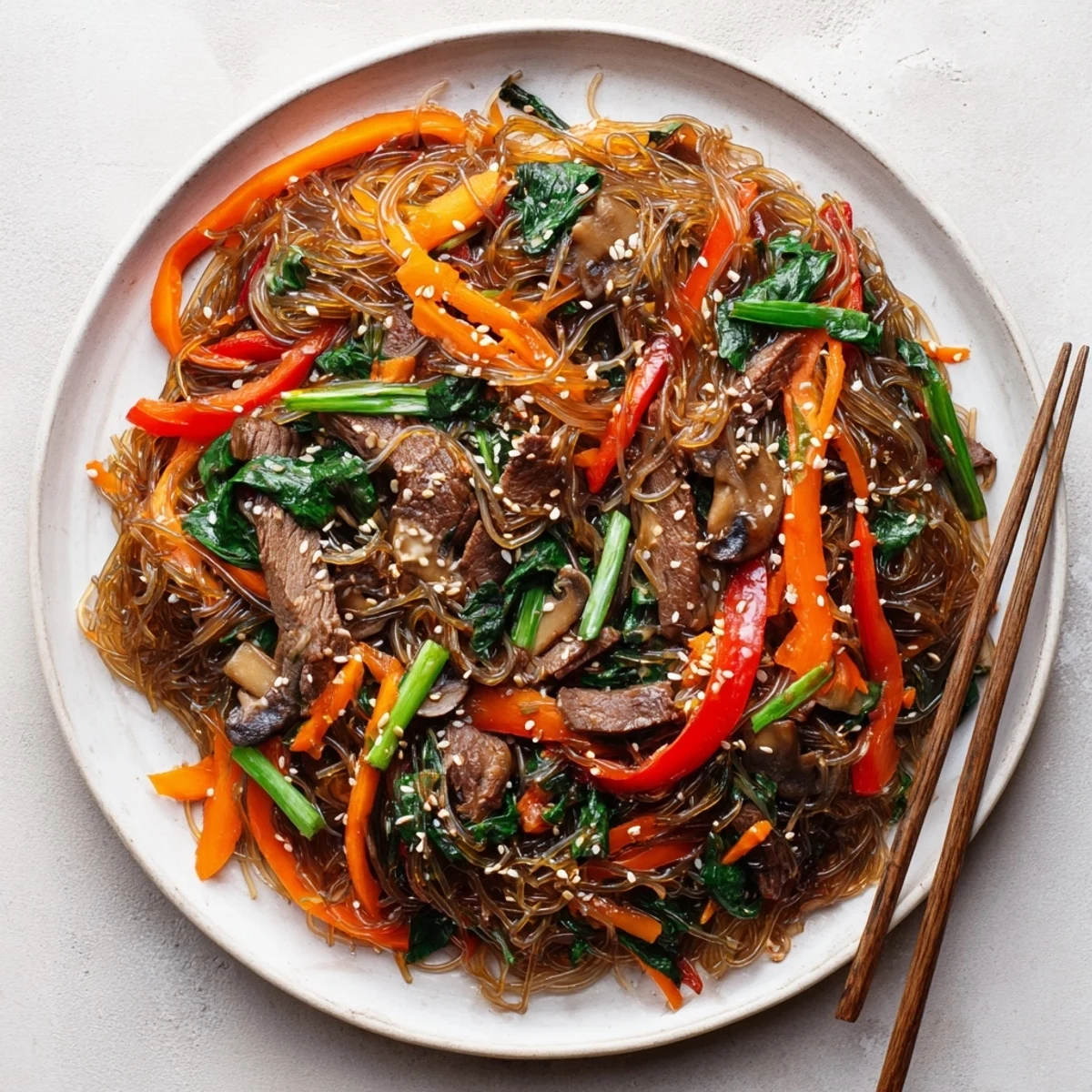
Save Whether it is a Tuesday night dinner or weekend feast, these Korean beef noodles bring comfort and joy in every slurp.
Recipe FAQs
- → What type of noodles work best for Korean beef noodles?
-
Korean sweet potato glass noodles (dangmyeon) are traditional, offering a delightfully chewy texture. Rice noodles make an excellent gluten-free alternative that absorbs the savory sauce beautifully.
- → How can I adjust the spice level?
-
Increase gochujang for more heat or add red pepper flakes. For a milder version, reduce the chili paste to 1 teaspoon or omit entirely while keeping other sauce ingredients.
- → Can I prepare this dish ahead of time?
-
Marinate the beef and prepare the sauce up to 24 hours in advance. Cook vegetables and noodles just before serving to maintain their ideal texture and freshness.
- → What protein alternatives work well?
-
Sliced chicken breast, pork tenderloin, or firm tofu all substitute beautifully. Adjust cooking times slightly—chicken needs 4-5 minutes, tofu requires just 2-3 minutes to brown.
- → Is this dish gluten-free?
-
Use gluten-free tamari instead of soy sauce and verify your gochujang and noodles are certified gluten-free. Rice noodles naturally work well for dietary restrictions.
- → What vegetables can I add or substitute?
-
Bok choy, snap peas, zucchini, or shredded cabbage all complement the flavors. Adjust quantities to maintain balance between protein, vegetables, and noodles.