
 Save
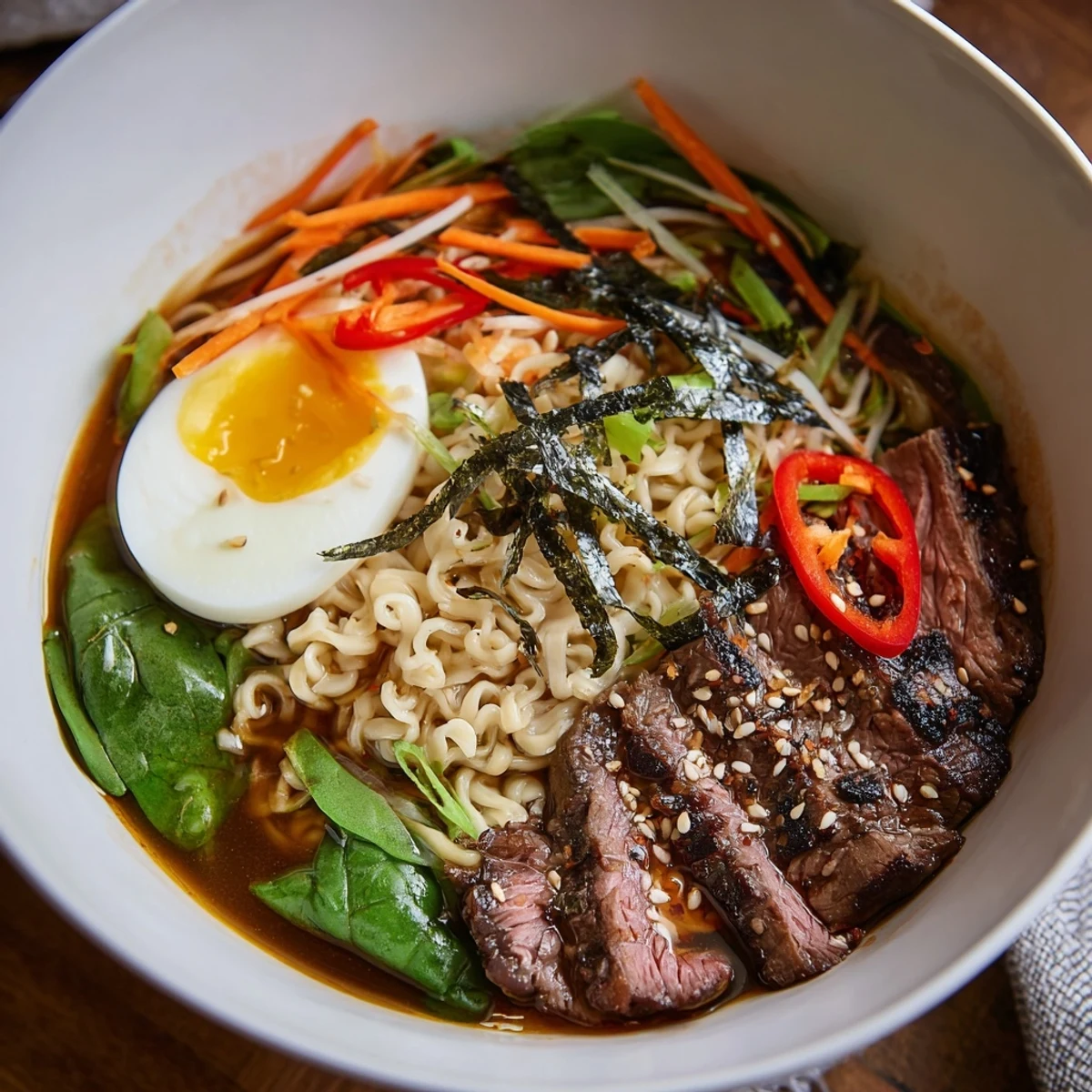
Save This dish combines tender marinated beef with a spicy, aromatic broth infused with garlic, ginger, and chili paste. Fresh ramen noodles offer a chewy texture balanced by blanched greens and julienned carrot for color and crunch. Soft boiled eggs provide a silky richness that complements the savory layers. Perfect for a comforting dinner, it blends bold flavors and textures in every spoonful.
There's something about a steaming bowl of spicy ramen that stops time on a cold evening. I discovered this particular version during a late-night cooking experiment when I had beef, eggs, and an inexplicable craving for something both comforting and fiery. My kitchen filled with the aroma of ginger and garlic hitting hot oil, and I realized I was creating something that would become a regular request from friends. Now, whenever someone asks what I'm making on a chilly night, this is often the answer.
I made this for my neighbor once during a particularly brutal snowstorm, and watching her face light up when she tasted that first spoonful was worth every minute of chopping vegetables. She sat at my kitchen counter with the bowl cradled in her hands, and we ended up talking for hours while the steam rose between us. That's when I knew this recipe had become something special—it was no longer just about feeding yourself, but about creating a moment.
Ingredients
- Flank steak or sirloin, thinly sliced: The thickness matters more than you'd think; slice against the grain so each piece stays tender even after searing.
- Soy sauce: This appears twice because it's the backbone of the marinade and the broth, building layers of umami.
- Sesame oil: Just a teaspoon goes far; it adds a nutty depth that regular oil can't match.
- Fresh ginger and garlic: These are the aromatic foundation—mincing them small means they dissolve into the broth rather than staying as chunks.
- Gochujang or Sriracha: Gochujang gives a deeper, more complex heat, while Sriracha is sharper; choose based on what you have and your spice tolerance.
- Miso paste: White or red both work, but stir it in gently to preserve its beneficial probiotics and rich flavor.
- Mirin: This sweet rice wine balances the heat and salt, creating harmony in the broth.
- Rice vinegar: A tablespoon cuts through the richness and brightens everything up.
- Beef or chicken stock: Homemade is ideal, but quality store-bought works beautifully too.
- Fresh ramen noodles: They cook in minutes and have a better texture than dried, but dried noodles work if that's what you have on hand.
- Soft boiled eggs: The runny yolk is non-negotiable; it acts like a sauce when it breaks into the hot broth.
- Baby spinach or bok choy: The heat from the broth wilts them perfectly in seconds, adding a fresh green element.
- Scallions and fresh chili: These go on last, raw and sharp, providing contrast to the warm, rich bowl.
Instructions
- Marinate the beef while you breathe:
- Toss your sliced beef with soy sauce, sesame oil, and pepper in a bowl and set it aside. This isn't a long marinade—even ten minutes lets the flavors start to seep in, making each bite taste intentional rather than plain.
- Time the eggs perfectly:
- Bring salted water to a rolling boil, gently lower in your eggs, and set a timer for exactly six and a half minutes. The ice bath stops the cooking instantly, so you get that perfect soft yolk waiting inside.
- Build the broth base with intention:
- Heat oil in your pot, listen for the garlic to sizzle and smell incredible, then add the ginger. Once fragrant, add your gochujang and miso, stirring for a minute to let them toast slightly and develop deeper notes before adding the liquid.
- Let the broth whisper:
- Pour in stock and water, bring to a gentle simmer, and let it bubble quietly for ten minutes. This isn't aggressive cooking; it's letting the flavors marry and mellow.
- Sear the beef with confidence:
- Get your skillet very hot, then add the beef in a single layer. Let it sit for a minute before moving it around; this creates a crust that locks in the juices.
- Cook noodles separately for control:
- Follow package instructions exactly, then drain immediately. This prevents them from getting gummy in the hot broth.
- Wilt the greens at the last second:
- Drop spinach or bok choy into the simmering broth just before serving; thirty seconds is often enough. Fish them out with tongs to control the texture.
- Assemble like you're building something precious:
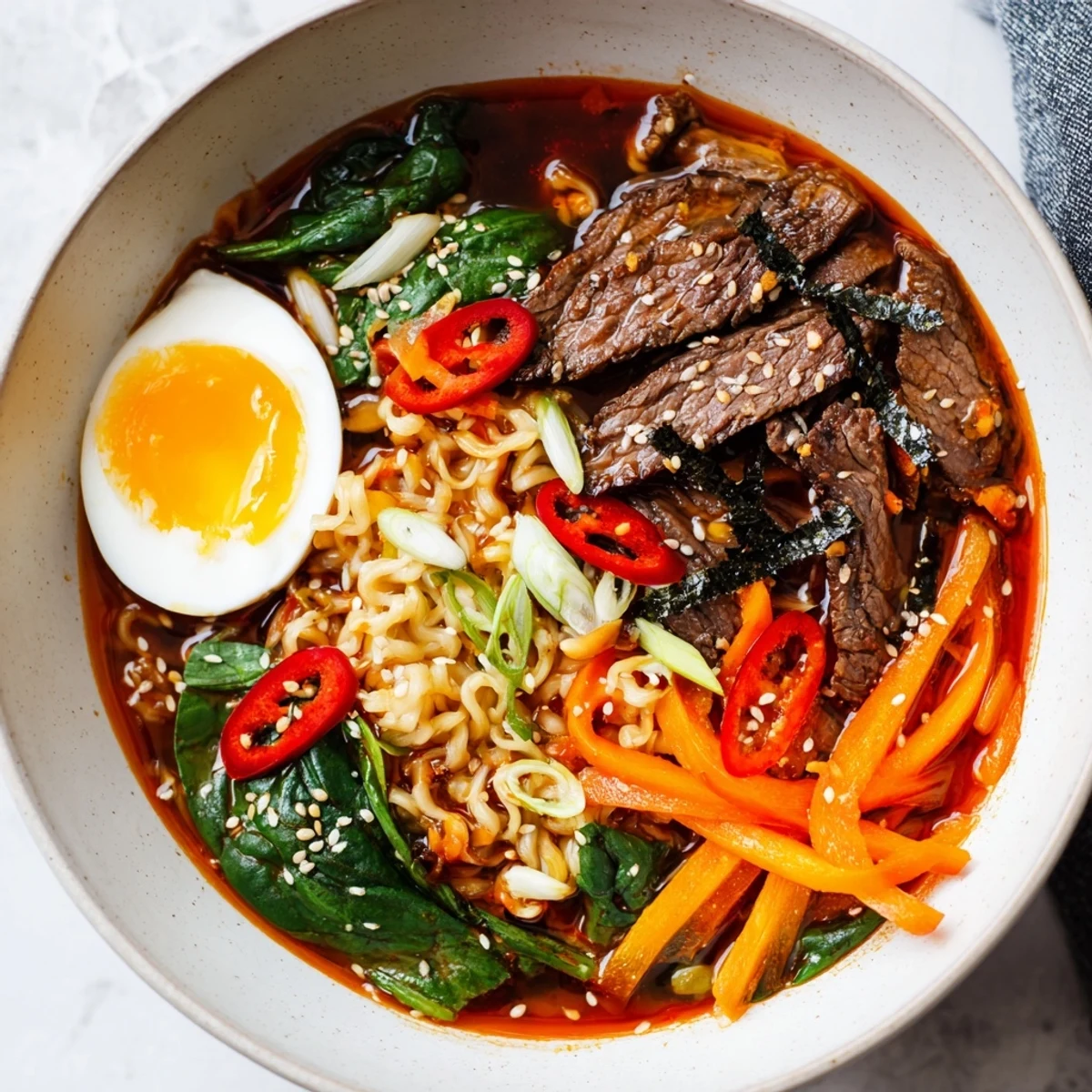
- Layer noodles, then broth, then beef, then greens, then the halved egg so its yolk sits invitingly on top. Scatter your garnishes with a gentle hand.
 Save
Save There was an evening when I made this for someone I was trying to impress, and the conversation flowed so naturally over the bowls that I almost forgot to eat my own. Food has a way of doing that sometimes—making you present in a moment instead of thinking ahead. That bowl became the reason we kept talking until midnight.
The Spice Spectrum
The beauty of this dish is that it meets you exactly where your heat tolerance lives. Gochujang carries a deep, almost fermented warmth that builds slowly, while Sriracha hits sharper and faster. My advice is to start with what the recipe calls for, then keep the extra paste nearby—you'll always have people at your table with different preferences, and adding spice is easier than removing it. One friend always asks for extra, another always asks for less, and somehow this bowl makes both of them happy.
The Egg: Your Secret Weapon
That soft boiled egg isn't just decoration; it's the moment when the entire bowl shifts. As soon as the yolk breaks and swirls into the hot broth, the whole experience becomes richer, creamier, and somehow more complete. I learned this by accident when I first made this—I overcooked an egg, got frustrated, and started eating anyway, only to realize the undercooked yolk from a second egg was what made everything better. Now I consider the egg the heart of the bowl, and I guard those six and a half minutes like I'm protecting something sacred.
Serving and Pairing
Ramen is best eaten hot and eaten quickly, so gather everyone to the table before you ladle the broth. The noodles will start to soften the longer they sit, and the garnishes will lose their crispness, so there's a small window where everything is at its absolute best. Pair this with a crisp lager to cut through the richness, or sip chilled sake between bites for something more elegant.
- Serve in deep bowls warmed under hot water for a minute beforehand; cold bowls steal heat from the broth.
- Have extra scallions and chili on the side so people can customize their heat level after the first taste.
- If anyone requests a vegetarian version, swap the beef for marinated tofu and use vegetable stock instead.
 Save
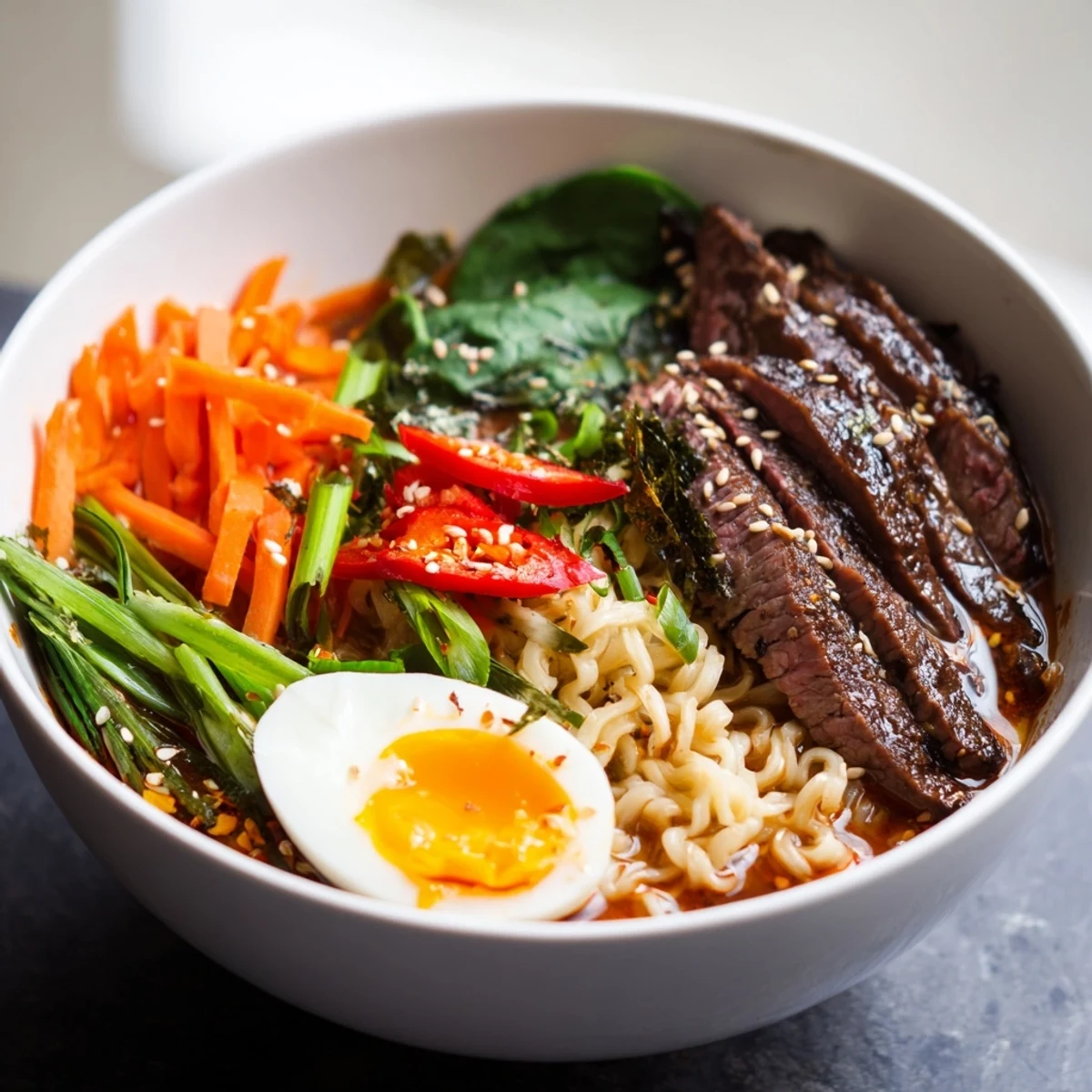
Save This recipe has become the thing I make when I want to say something without words—when I want to say I care through warmth and flavor and the kind of attention that goes into getting every component just right. It's become a bowl full of small moments that somehow add up to something meaningful.
Recipe FAQs
- → How do I achieve a perfectly soft boiled egg?
-
Boil eggs for 6–7 minutes, then immediately transfer to an ice bath. This stops cooking and makes peeling easier, ensuring a tender yolk.
- → What cut of beef works best for this dish?
-
Flank steak or sirloin thinly sliced are ideal due to their tenderness and quick cooking time in the spicy broth.
- → Can I adjust the spice level?
-
Yes, modify the amount of gochujang or Sriracha to suit your heat preference, increasing for more kick or reducing for mildness.
- → What greens pair well with this bowl?
-
Baby spinach or bok choy are great choices, quickly blanched to add freshness and subtle crunch without overpowering the broth.
- → How should the broth be prepared for maximum flavor?
-
Sauté garlic and ginger until fragrant, then simmer with chili paste, miso, soy sauce, mirin, and rice vinegar to build a rich, layered taste.