
 Save
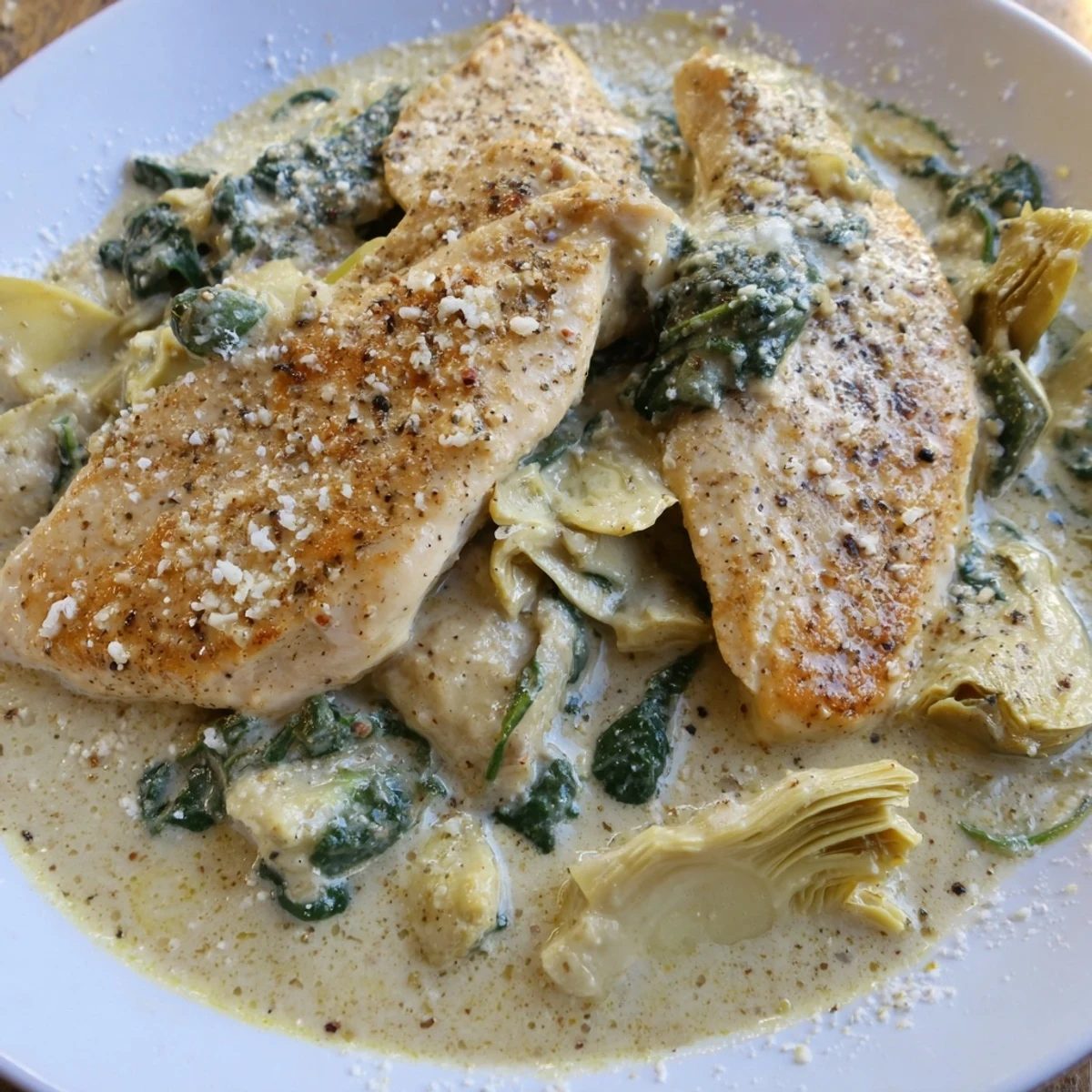
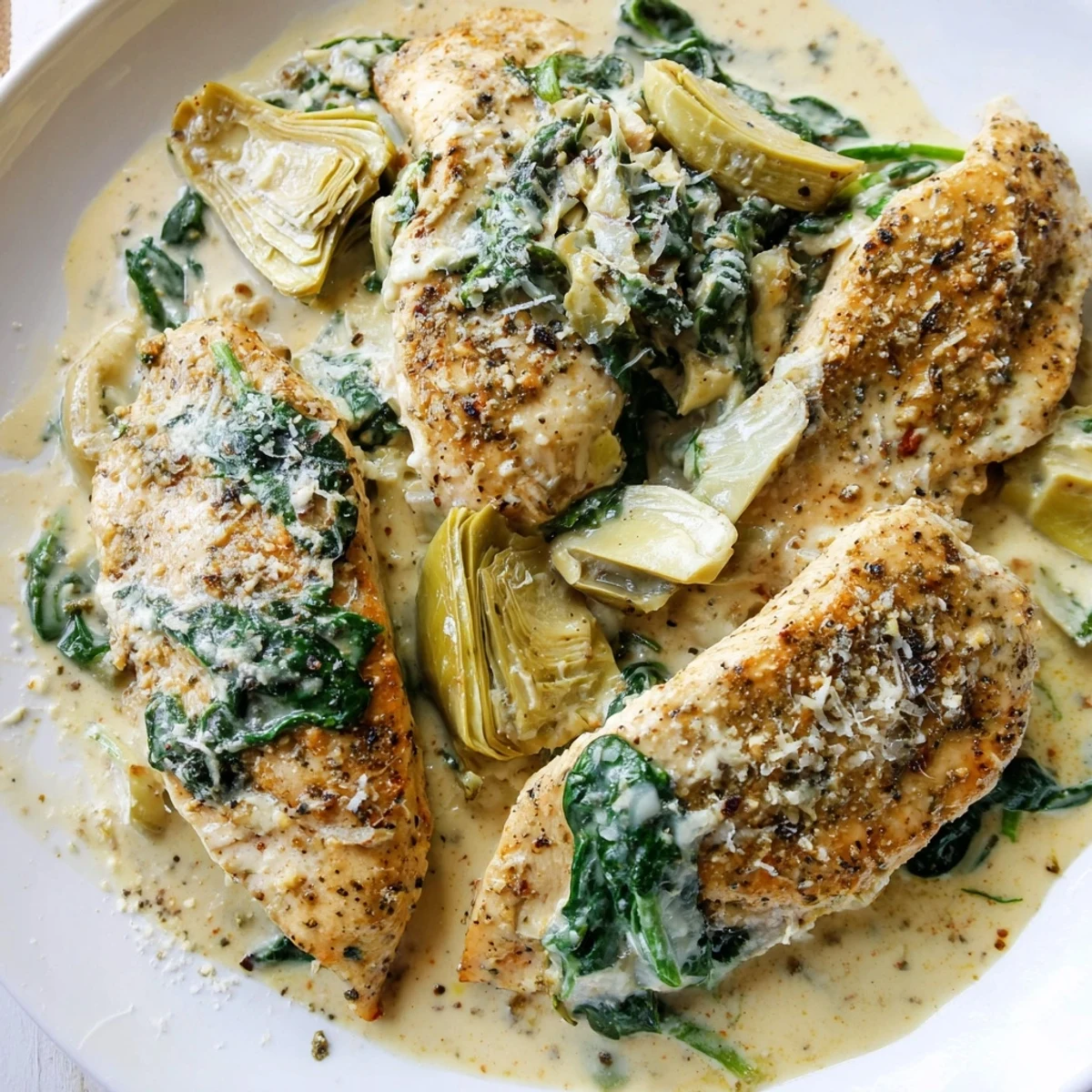
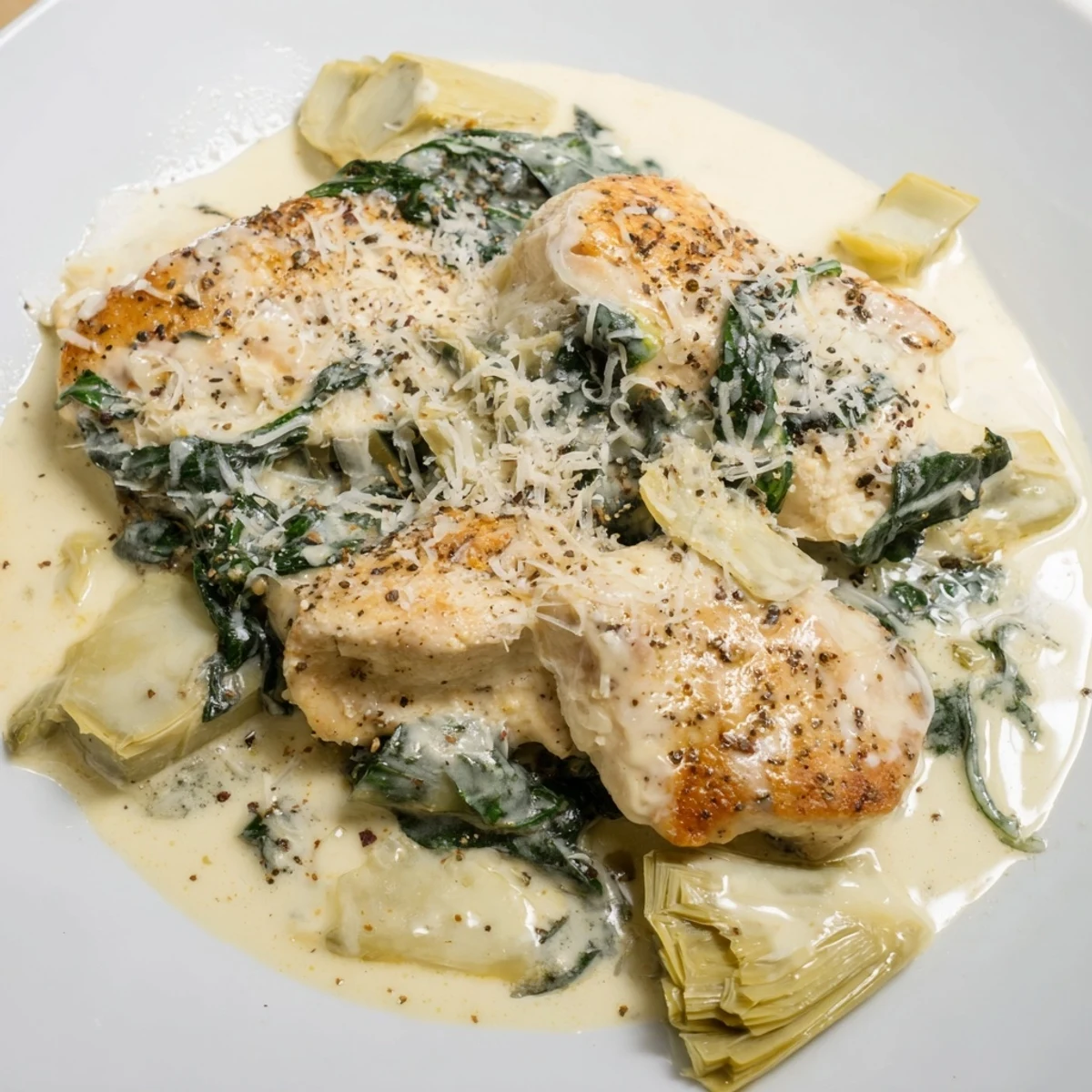
Save This dish features tender chicken breasts cooked in a creamy, garlicky sauce enriched with fresh spinach and artichoke hearts. The skillet method creates a comforting meal that is both quick and flavorful, perfect for weeknight dinners. The creamy sauce, layered with Parmesan and subtle Italian seasoning, coats the chicken while the spinach and artichokes add vibrant texture and nutrients. Ready in just 40 minutes, it offers a balanced, satisfying main dish.
There's something about a cream sauce that transforms a simple Wednesday night into something worth lingering over. I discovered this skillet meal while trying to use up a can of artichokes I'd impulse-bought at the grocery store, wondering if I'd made a mistake. Twenty-five minutes later, my kitchen smelled like garlic and butter, and I realized this dish had quietly become one of those meals I'd make again and again without thinking twice.
I made this for my partner on a night when I'd promised dinner but the day had completely run away from me. Watching their face light up when they tasted it—that moment when they stopped to really savor a bite—made the whole thing feel less like a weeknight scramble and more like I'd actually put thought into something. That's when I knew this recipe was keeper material.
Ingredients
- Boneless, skinless chicken breasts: Four breasts about 1.5 pounds total work perfectly; they're forgiving and cook evenly in a skillet.
- Kosher salt and freshly ground black pepper: Don't skip the grinding step—it makes a surprising difference in how the chicken browns.
- Olive oil: One tablespoon is enough if your skillet is good quality; it helps the chicken develop that golden crust without drowning in oil.
- Garlic: Two cloves minced fine; mince it yourself rather than using jarred if you can, the flavor is noticeably cleaner.
- Fresh baby spinach: Four cups wilts down to almost nothing, which is why you can pile it in without worry.
- Artichoke hearts: A fourteen-ounce can, drained and quartered; they stay tender and add an earthy sweetness to the cream.
- Heavy cream: One cup creates the luscious sauce that makes this dish special; it needs the fat to balance the other flavors.
- Low-sodium chicken broth: Half a cup lightens the cream slightly and keeps the sauce from feeling too heavy.
- Grated Parmesan cheese: Half a cup melts into the sauce and adds a salty, nutty depth that ties everything together.
- Dried Italian seasoning: Half a teaspoon is subtle enough to enhance without overpowering the fresh spinach.
- Crushed red pepper flakes: Optional but worth adding if you like the idea of warmth lingering in the finish.
Instructions
- Prepare and sear the chicken:
- Pat your chicken breasts dry before seasoning them—this helps them brown instead of steam. Sear them in hot oil for four to five minutes per side until the outside is golden and the inside is cooked through; the meat should feel firm but still give slightly when you press it gently.
- Build the aromatics:
- Once the chicken is set aside, the skillet is the perfect temperature for garlic; thirty seconds is all it takes before it starts to brown. You'll smell it transform from raw to fragrant, and that's your signal to move forward.
- Wilt the spinach and add the artichokes:
- The spinach will seem like too much until you start stirring, then it collapses down into tender ribbons in about two minutes. Fold in the quartered artichoke hearts and let them warm through for a minute, just so they're not cold when the cream goes in.
- Create the sauce:
- Pour the cream and broth together gently and bring it to a soft simmer—you want tiny bubbles rising gently, not a rolling boil. Stir in the Parmesan slowly, watching it melt and thicken the sauce into something silky, about three minutes, then add the Italian seasoning and red pepper flakes if you're using them.
- Finish and serve:
- Nestle the chicken back into the skillet and let everything simmer together for two to three minutes, spooning sauce over the chicken so it absorbs the flavors. The chicken will be moist and tender, the vegetables soft, and the whole dish will smell like comfort.
 Save
Save There's a moment in cooking when separate ingredients stop being a list and become something whole. For me, it happens in this dish the instant the cream and Parmesan combine, when the sauce shifts from thin to silky right before your eyes. That small moment of transformation is why I keep making it.
Why This Skillet Approach Works
Cooking everything in one pan means the chicken juices stay in the skillet, seasoning the sauce as it builds around them. The spinach releases its own moisture, which mixes with the cream to create something deeper than you'd get if you built the sauce separately and poured it over. Every component touches and flavors every other component, which is the whole point of a skillet meal.
Making It Fit Your Table
This dish is flexible without losing its identity. If you want it lighter, half-and-half works in place of heavy cream, though the sauce won't be quite as luxurious. Over cauliflower rice it's a quiet, elegant low-carb dinner; over pasta it becomes something richer and more indulgent. I've added sun-dried tomatoes on days when I wanted more complexity, and the brightness of fresh lemon zest on nights when the cream felt too heavy. The base is strong enough to handle experimentation.
Small Details That Shift Everything
The way you finish the dish matters more than you'd think. A sprinkle of fresh Parmesan at the table, maybe a crack of black pepper, a tiny pinch of red pepper flakes if you didn't add them to the sauce—these aren't garnish, they're the last word in the conversation between you and the food.
- Always taste the sauce before the chicken goes back in and adjust the seasoning then, when you can still taste it clearly.
- If you have fresh basil or parsley at hand, a whisper of it stirred in at the very end adds brightness that the dried seasoning can't quite reach.
- Serve this hot, straight from the skillet; it loses something essential as it cools, and there's no reason to rush it when the whole meal takes less than an hour.
 Save
Save This is the kind of meal that reminds you why people love cooking in the first place—not because it's complicated, but because something simple, made with care, can transform an ordinary evening into something worth remembering. I hope it does the same for your table.
Recipe FAQs
- → Can I use fresh artichokes instead of canned?
-
Yes, fresh artichokes can be used but require steaming and peeling before adding. This adds freshness but increases prep time.
- → How do I prevent the cream sauce from curdling?
-
Simmer the sauce gently over medium heat and avoid boiling to maintain a smooth texture without curdling.
- → Is this dish suitable for a low-carb diet?
-
Yes, the ingredients focus on lean protein and vegetables, making it a low-carb option especially when served with cauliflower rice.
- → Can I substitute heavy cream with a lighter alternative?
-
Half-and-half can replace heavy cream for a lighter sauce, though the texture might be slightly less rich.
- → What cheese works best in this creamy sauce?
-
Grated Parmesan blends well, offering a nutty, savory depth that complements the cream and vegetables.